By Renuka Vaidyanathan
 |
| The girls with their Guru Sheejith Krishna, Photo credit: Lijesh Karunakaran |
 |
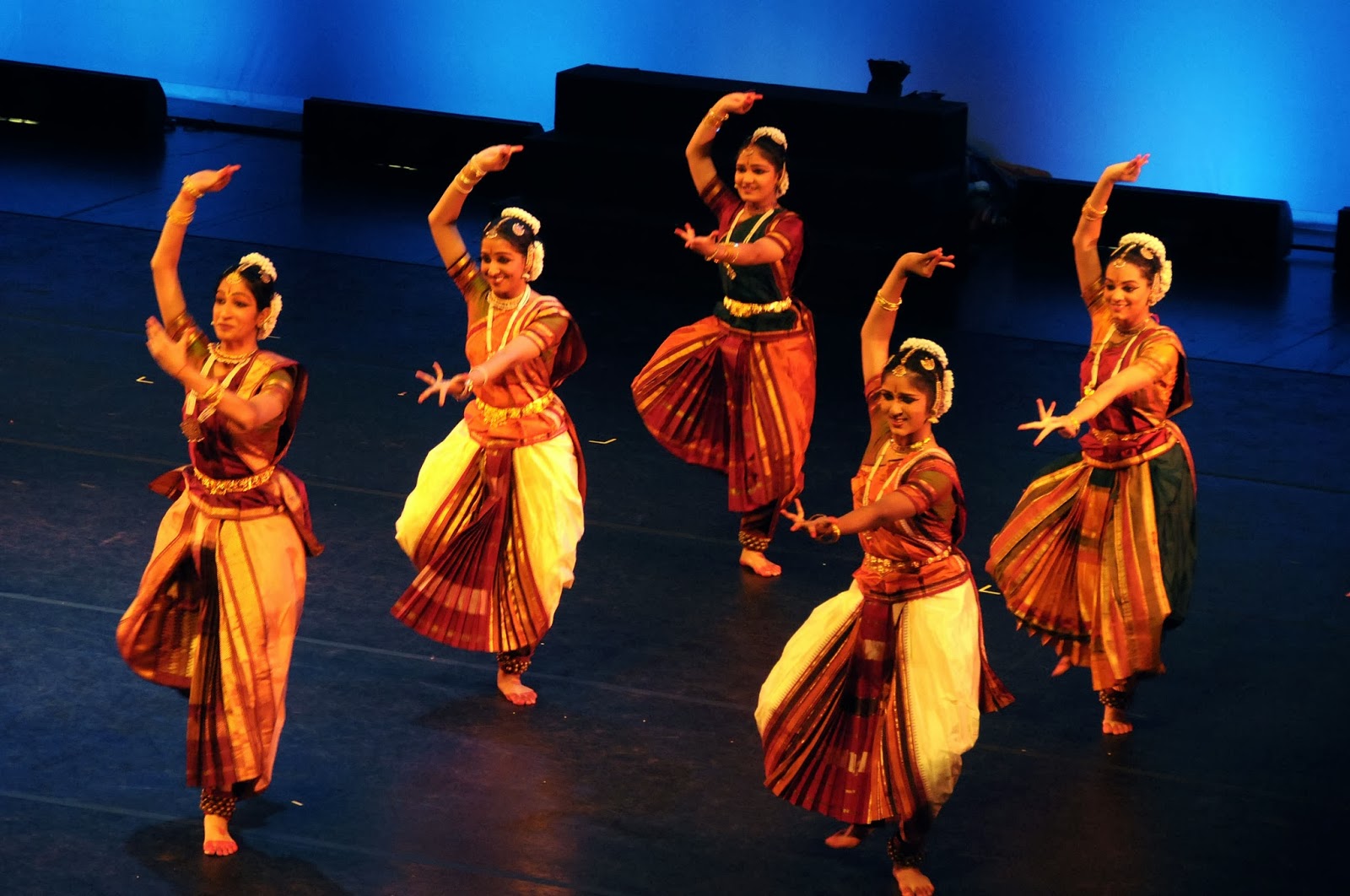
| Pravaha dancers, Photo credit: Lijesh Karunakaran |
An original dance theatre production by SIFAS students and alumni, choreographed by Sheejith Krishna, ‘Pravaha’ will celebrate the dance of water, the journey of cloud, rain and river, the flow of creative imagination set free, the dance of the human spirit at one with nature…
The production Pravaha will be
inspired by the rich lyricism of classical poetry on the iconic Ganga (the
river Ganges), Kalidasa’s ‘Meghadutam’ and other traditional and modern stories
on cloud, rain and river. It will
trace the journey of water from the origin of life in the Cosmos to the
appearance of first humans on the planet. It will then highlight through the
story of water, how human response to nature has evolved over millennia,
finding expression in mythology and sacred/secular art. Pravaha will unfold a journey of
confluence and birth, connection and balance, division and destruction, rebirth
and rejuvenation. Emphasising the
interconnectedness of all living things, the production would showcase, through
the lovely medium of Bharatanatyam, human kind’s greatest challenge today-
saving our fresh water rivers and lakes and preserving and protecting our
environment.
Pravaha is not just a dance
production for its dancers but a moving human experience as well. It has
been a very poignant learning process for the dancers involved in the
production. They range in age from 16 to 30: some are students; some are
working women; some are mothers even. They juggle their various
responsibilities while being a part of this production.
Working with Sheejith
Krishna has been an intensely moving experience for these dancers as he teaches
them values, in addition to dance. They learn to be better human beings, in the
process. Sheejith Krishna says, "If you want to be a good dancer, be a
good human being first and a good artist next. Cultivate a good eye for
everything around you, in life and in art. Sharpen your sense of
aesthetics: texture, colour, light, shade, sound, smell, taste, your sense of
the whole. Absorb everything around you. If you have that eye, that
vision, if you lose yourself in the appreciation of the greater whole, your
dance will shine”. As the dancers practice vigorously and imbibe life lessons, here is a small glimpse of the rehearsal sessions which are so full of energy and infectious enthusiasm that even non-dancers feel like joining the dancers in their practice. The production promises to be much
more than just a dance, but a journey through life’s stages!
Come, feel the flow with us. On April 11, at 8 pm at the Esplanade theatre.
The Pravaha dancers:
 |
| Meera and Jaya |
 |
| Renisha and Preethi |
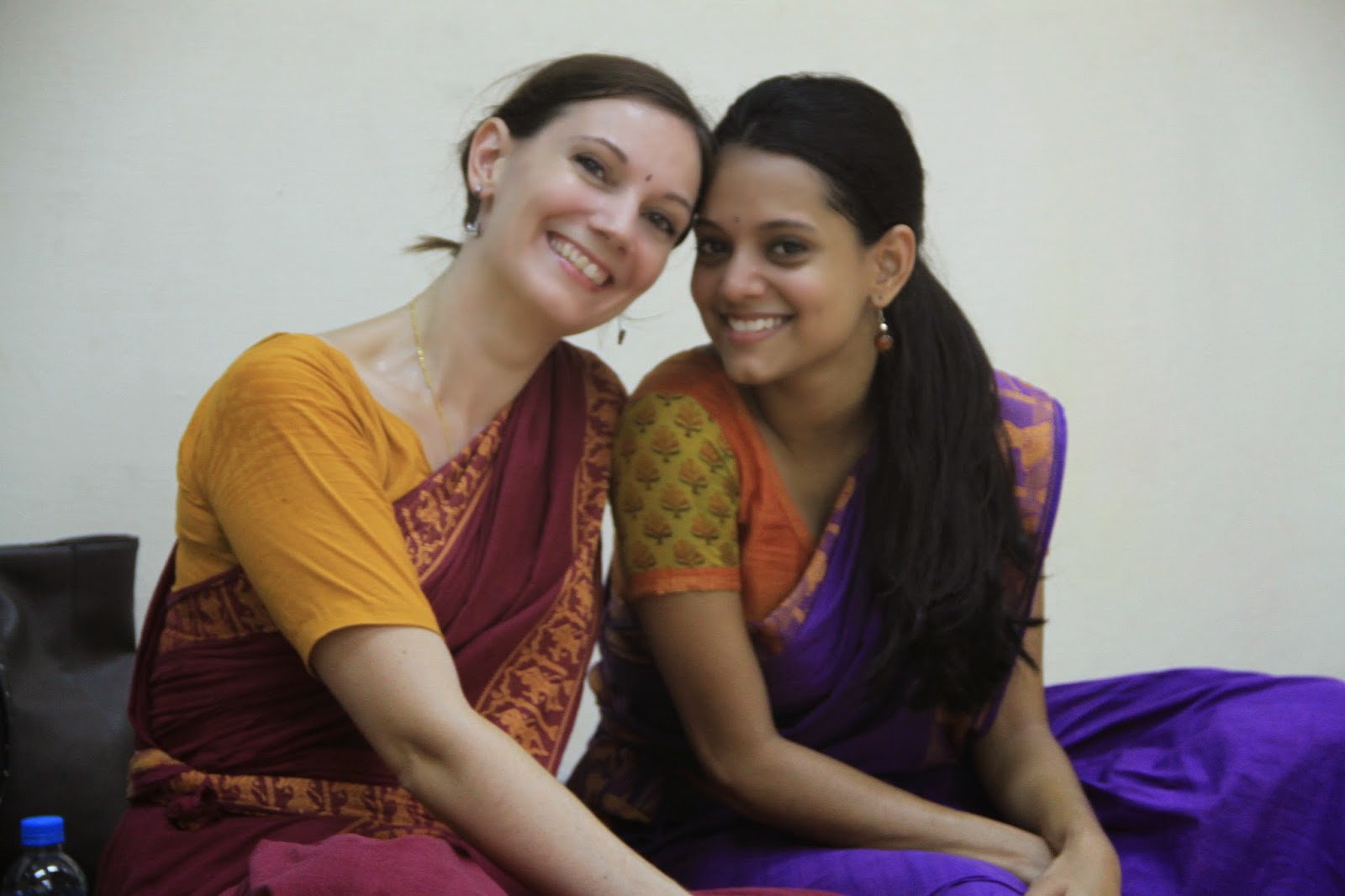 |
| Charline and Dhriti |
 |
| Sambhavi and Shivani |
 |
| Dhanya and Aarthi |
 |
| Lavanya and Sruti |
Photo credit: Renuka Vaidyanathan
Aarthi Devarajan
Aarthi Devarajan is a Bharatanatyam
alumnus of SIFAS and has been learning for the past 12 years. In her first few
years, she was under the tutelage of Guru V Balagurunathan. During her senior
years, she blossomed under the able guidance of Guru Saroopa Das and completed
her arangetram in Chennai in 2009. She then went on to learn the intricacies of
the art from Guru Roopika Julian and with her able guidance, Aarthi completed
her final year in the diploma course in 2011 and was blessed with the title of
‘Natya Visharadh’. She has been performing widely since 2008
in both Singapore and India. Aarthi is a student of architecture at SUTD,
Singapore.
Charline Marzin
Charline has been practicing
Bharatanatyam for the past 10 years, initially falling in love with this art
form after watching a performance in Paris, France. She is currently under the
tutelage of guru Sanjit Lal in SIFAS, and is also the disciple of Smt Shyamala
Surendran from Dharani School of Performing Arts, Cochin, India, and Smt
Shakuntala in Exeter, UK, and was also a disciple of Smt Minal Prabhu during
her years in Bangalore in 2004-2005. She performed her arangetram in the UK in
July 2012, and previously performed multiple solo performances in Cochin, India
and Paris, France. Charline, a French national and mother of a 4-year old,
works as a climatologist in Singapore.
Dhanya Menon
Dhanya has been learning Bharatanatyam in SIFAS since she was
9 years old. She has performed in various temples and auditoriums for functions
island wide and internationally, including the Esplanade in Singapore, Sutra
theatre in Malaysia, the Madras University and the Varasiddhi Vinayaga Temple
in Chennai. Dhanya has represented her school at the Indian Embassy for the
Independence Day gathering; she also performed in the august presence of the
erstwhile President of India, Dr. A P J Abdul Kalam. She completed her diploma
in Bharatanatyam at SIFAS in 2013 and had her arangetram at UCC, NUS, Singapore
in July 2013.
She has also participated
in cultural programs during Indian festivals. Besides dance, she is interested
in playing the drums. She is also aiming to attain a higher level in French at
Alliance Francaise, Singapore.. Dhanya is currently a 3rd year Advertising
student in the Nanyang Academy of Fine Arts.
Dhriti
Vaidyanathan
Dhriti Vaidyanathan, is an
emerging Bharatanatyam artiste from Singapore. Dhriti, who has been dancing for
over 14 years, did her training
under the Kalakshetra tradition at Singapore Indian Fine Arts Society(SIFAS), under the tutelage of Guru Minal Merai.
Dhriti completed her diploma in Bharatanatyam in June 2008 and was awarded the
title of ‘Natya Visharadh’ by SIFAS.
Dhriti did her Arangetram
in Chennai, India in 2006 and has since performed solo recitals in Singapore,
India, Indonesia, USA and UK. She was recently selected by the Music Academy,
Chennai to perform in The Spirit of Youth festival in Chennai. She is currently
under the tutelage of senior Guru Roja Kannan who is a senior disciple of Guru
Padmashri Adyar K Lakshman. She has performed
regularly in the Chennai Marghazhi season as well as in the SIFAS festival in
the past. She was a part of the ensemble production Krishna Bharatham
choreographed by Guru Sheejith Krishna for the SIFAS festival in 2012. She is a graduate of the University of
the Arts, London and works with Singtel Digital Media in Singapore.
Jayaletchmi
Jayaletchmi began learning Bharatanatyam at the tender age
of three. Initially taught by the late Guru Shilpa Chandran, she then learnt
from Guru Saroopa Das and Guru Roopika Julian. Having attained her Diploma last
year, she is currently under the tutelage of Guru Ramya.
Bharatanatyam has formed a large part of Jaya’s schooling
years. She was a member of the Raffles Institution Indian Dance troupe that
participated in the Singapore Youth Festival in 2011 in which her team clinched
the Gold with Honours award, and was also the leader of the Indian Dance group
in Cedar Girls’ Secondary School. Jayaletchmi is studying law at NUS,
Singapore.
Lavanya
Rengarajan
Lavanya Rengarajan, is currently under the tutelage of
Guru Ramya in the Singapore Indian Fine Arts Society. Lavanya was
awarded the best student award in her 5th year dance examinations. She has
also received training from Guru Seetharama Sharma, Guru Shilpa Chandran, Guru
Saroopa Das , Guru Roopika Julian and now continues her passion under the
expertise and guidance of Guru Ramya.
She has performed in numerous dance programmes such as the
SIFAS Academy Day, the SIFAS Festival of Music and Dance in 2008, and also in
temple Kumbhabhishegams, Navaratri Festivals, Vasantham TV shows, and other
community programmes.
Dance has provided her with the platform to exhibit her
talents and expand her potentials, while having taught her the essential life
lessons of discipline, resilience and humility.
Lavanya has completed her Diploma in Computer
Engineering in Singapore Polytechnic and her passion for dance is further
exhibited through her participation in her school's annual musical,
'Samarpanam', various semi-classical dance performances in school events and
many Community Art programmes.
Lavanya is a business student at SIM, Singapore.
Meera
Balasubramanian
Meeera trained in India under Mrs.Ranganayaki Jayaraman and
later under Mrs.Prabha Kini in Bangalore. She joined SIFAS in the year 2009
under Guru Roopika Julian and is currently training under Guru Sanjit Lal. She
has performed in various temples during Shivarathri and Navarathri festivals
and Corporate shows. She recently had her Arangetram performance
in Chennai Music under the able guidance of Ms. Roopika Julian and Kalakshetra
Shri Hari Padman.
She has also trained in Carnatic music for more than 15
years.
She is a
Banking Graduate from the Madras University and also has a diploma in
computers and used to work as a software engineer. She is a mother of twin
children and teaches dance.
Preethi
Devarajan
Preethi Devarajan holds a
diploma in Bharatanatyam from SIFAS. She is currently under the tutelage of
Guru Sanjit Lal. Preethi was part of the Cedar Girls Secondary School Indian
Dance team which won the Silver Award in the Singapore Youth Festival 2011. She
is also a regular performer at the Community Life Arts Programme (CLAP) that is
organized by Central CDC. Preethi has also been performing in Singapore at
temple Kumbhabhishegams and Navarathri festivals. In 2011, during the December
season, Preethi had her maiden performance in India at the Hamsadhwani NRI
Festival. In December 2012, Preethi completed her Arangetram in Chennai.
Preethi has also performed in the SIFAS Festival 2012 and 2013. Preethi is
a secondary school student.
Renisha Paul Mukkam
Renisha completed her 8th year in 2012 under the tutelage of
Guru Shyamjith Kiran. She was previously a student of Sri V Balagurunathan. In
the 2012 Music and Dance Festival, she performed in Krishna Bharatham, a
production by Sri Sheejith Krishna, and staged a solo performance at the SIFAS
auditorium. She was also one of 2 guest performers from SIFAS to perform at
Sangamam, a Vasantham production, at the Esplanade. She is also a 6th year
Veena student of Guru Meenakshi Somasundaram. Renisha was also Chairperson of
the Raffles Girls’ School and Raffles Junior College Indian Dance teams.
Renisha is interning at PWC while waiting to attend University.
Sambhavi
Rajangam
Sambhavi Rajangam commenced her Bharatanatyam training in
SIFAS, under the tutelage of Smt Minal Merai at the age of five. Her guru's
dedicated guidance enabled Sambhavi to receive the "Best Student
Award" for her performance in
her 5th year Bharatanatyam examination. She then went on to complete her
diploma in Bharathanatyam through SIFAS, under the able guidance of Guru
Roopika Julian and secured the ‘Natya Visharadh’ title award in recognition of her outstanding performance. She has
given solo performances in both the SIFAS and Chennai Festival of Music and
Dance and she has had the honour of performing at Afro Asian Philosophical
Conferences held in Mumbai and Chidambaram. Sambhavi has performed widely in
Singapore during various occasions such as the SIFAS Academy day celebrations
and navarathri performances. She was an ambassador of Singapore during
International Indian Fine Arts –Nadasangamam, a dance emsemble held in Chennai
in the years 2007 and 2008. Sambhavi is a secondary school student.
Shivani
Rajaraman
Shivani Rajaraman
has been learning Bharatanatyam since the age of 7. She was first
initiated into this art form through Guru Sitaravamma Sandrasegaran. After
which, she continued her learning under various teachers, Guru Maalika Girish
Panicker, Guru Sunitha Nair and Guru Swarna Iyer. In 2012, under the tutelage
of Guru Roopika Julian, Shivani finished her eighth year, graduating with the
title award of ‘Natya Visharadh’. She
is currently learning under Guru Ramya. Shivani has regularly performed in
temples during Navaratri and also in numerous SIFAS Academy Day productions.
She has also performed in the 2009 Indian Music and Dance festival in Chennai
and in the SIFAS Music and Dance Festival in the years 2010 and 2013. In 2012,
she was part of the Salangai Oli winning team, a dance competition on
Vasantham. In addition, Shivani was an active member of her alma mater, Raffles
Institution's Indian Dance team that won the Gold with Honours award for SYF in
2011. Shivani has also learnt Carnatic Vocal and has completed her 6th year. She is currently a medical
student at NUS, Singapore.
Sruti Rao
Sruti Rao has been learning Bharatanatyam for the past 15
years, and is currently under the guidance of Guru Sanjit Lal at SIFAS. She
completed her Bharatanatyam arangetram in 2006 under the guidance of Guru
Sitaravamma Sandrasegaran and thereafter performed regularly in Singapore and
India. Sruti has performed in numerous dance productions, including the recent
‘Glimpses of Angkor’ and Angkor- The Untold Story by Apsaras Arts, as well as
the SIFAS Alumni Production 2012 ‘Krishna Bharatham’ choreographed by Sri Sheejith
Krishna. Also a trained Carnatic vocalist, she hopes to continuously evolve in
her learning journey through the arts. Sruti works as a financial journalist in Singapore.